
A workflow focused on deadline triage for promoting the beginner works…
페이지 정보

본문
The team at the ceramic studio needs to promote its beginner workshop, but the folder contains notes and no coherent asset set. The work must make sense to first-time makers on a phone and lead naturally toward the choice to book a class. The editorial angle is deadline triage, with a behind-the-scenes decision providing the opening tension.
The planning sheet translates that search language into its underlying job: to repair or adapt an existing campaign photograph. Success means consistent light, geometry, identity, and editable finishing, not a large gallery of attractive drafts. That reading keeps the story tied to the beginner workshop rather than turning it into a tool list.
The center of the one-page brief is simple: help first-time makers understand the beginner workshop and decide whether to book a class. It sets the voice as tactile and welcoming; requires approved offer wording, date, price, eligibility, fulfilment, and contact route; and bans invented scarcity, guarantees, and endorsements. Constraints specify spelling, mandatory and avoided terms, source permissions, the 1:1 ratio, safe zones, 32 seconds, file formats, responsible people, and release time. Three labels matter: confirmed, verify before use, and illustrative only.
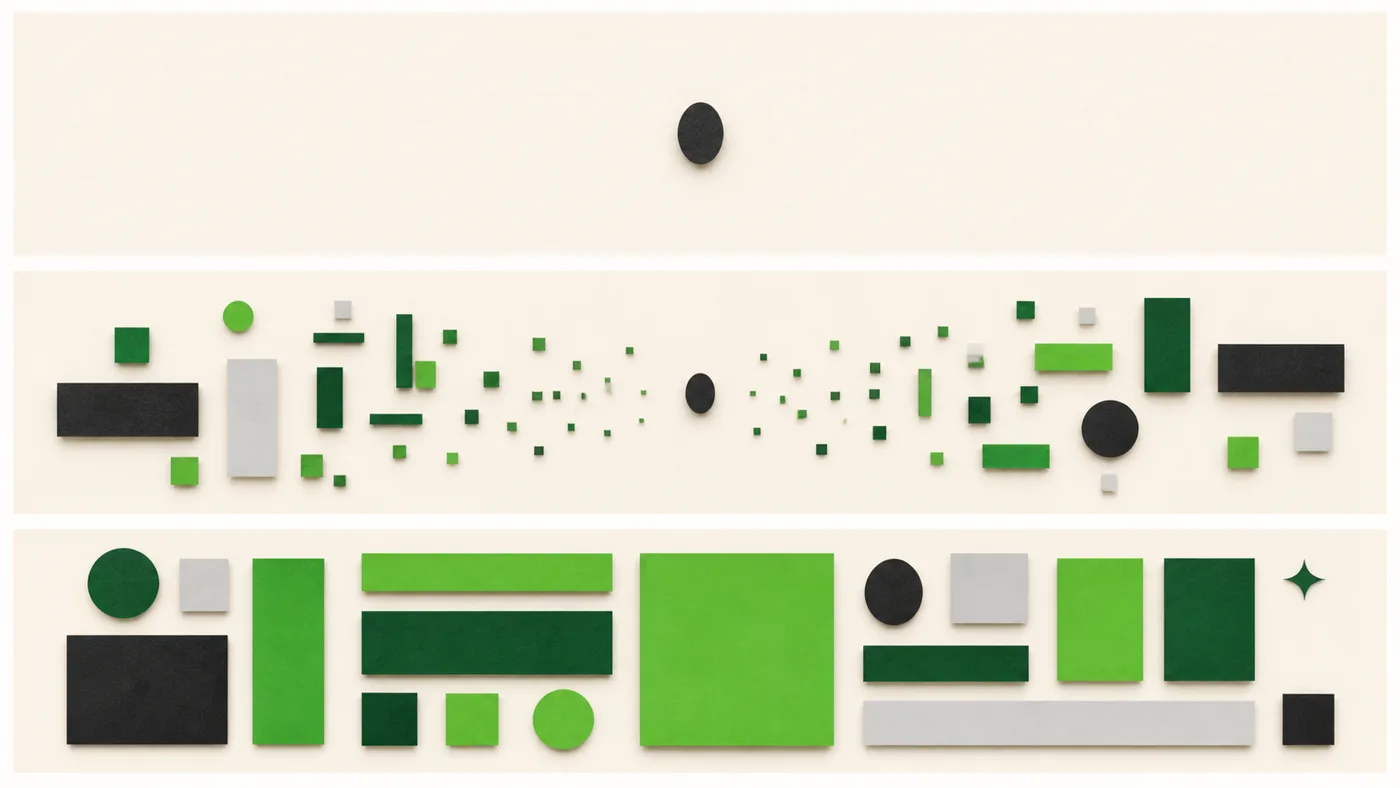
The visual is not decoration; it must show how one small action leads to the next step within the beginner workshop story. Its prompt names the beginner workshop, places the decision in the foreground, keeps support behind it, limits color to navy, pale blue, and restrained yellow, and requests 1:1. No essential detail enters the mobile crop or caption-safe margins; real copy is added later as an editable layer. The sample labels 'Quiet Start' and 'Local Hands' are illustrative examples only; no testing or performance is implied.
Specific model failures in this case include warped objects, changed faces, and mismatched shadows. Other risks include continuity errors, offensive ambiguity, accidental imitation, warped lettering, strange anatomy, and fabricated case-study claims. An editor catches them by tracing claims to the source sheet, enlarging every image, and watching the final cut cold with sound off and then on.
A vertical script capped at 32 seconds shows one decision, from loose notes about the beginner workshop to a reviewed asset. For three seconds, voiceover names a behind-the-scenes decision, screen copy stays under five words, and the camera shows real planning notes after private details are removed. The middle assigns four seconds to inputs, six to the example, and five to a visible check; closing seconds carry the confirmed next step. The shot sheet separates voiceover, on-screen text, direction, duration, source or assumption, and review note into six columns.
The schedule also reserves enough time for correction, source checks, and another careful final reading before any finished asset is queued. For the beginner workshop, the producer first makes one complete chain: approved message, adaptable composition, connected captions, and a short demonstration. Variants wait until the owner approves the chain; otherwise one unsupported assumption can spread through many exports and consume the review budget. A tracking row lists each asset, its purpose for first-time makers, source fact, format, status, next reviewer, and relationship to the action to book a class. Measurement uses a preselected behavioral signal rather than a vague impression; the owner records the publishing window and reach before interpreting inquiries, saves, or replies. The review can guide the next deadline triage cycle while remaining explicit about uncertainty, sample limits, https://aisocialmediapostgenerators.com/ and other explanations for the observed response. The operator uses descriptive file names, records approval beside the source, and separates superseded exports from current work; this reduces the chance that a polished rejection reaches a scheduled post. Each exported derivative is opened in context before release, catching platform compression, unexpected cropping, unsafe captions, broken links, or a reordered message that the working file did not reveal.
The writer requests several routes based only on the source page, leaving final copy until one route is approved. Options include a mistake-and-fix route around a behind-the-scenes decision, a three-step preparation route, a side-by-side decision, and a behind-the-scenes choice at the ceramic studio. Selection follows the deadline triage goal and rejects any route that needs a fabricated customer result.
The approved route expands into one explanation, a caption, a two-line hook, a five-card carousel, a voiceover, and three headline options. Each card has one job: identify friction for first-time makers, list inputs, demonstrate a hypothetical decision, review it, then invite people to book a class. If a fact is absent, the draft carries an editor query and stops short of publication wording. The copy earns space by helping the reader act, judge, compare, or avoid a known failure.
Platform adaptation begins from the approved message, not from pasting one caption into different boxes. The written channel preserves the decision process, the image channel leads with the clearest frame, and the carousel reveals one step at a time. Vertical video presents a behind-the-scenes decision immediately and remains phone-safe. Long-form keeps the full comparison, while a community edit requests feedback before people book a class.
First, a person verifies claims and changing rules with current primary sources, notes the date, and confirms that wording fits the audience and stated voice. At full size and on a phone, visual review covers spelling, repeated letters, icons, hands, object count, edges, shadows, interface logic, stray marks, contrast, reading order, safe zones, and every crop from 1:1. Motion review compares shots for continuity, verifies captions and spelling, checks pronunciation and levels, tests pace and safe areas, inspects opening and closing frames, and repeats the viewing muted. Sign-off follows when post, image, and clip agree on evidence, keep the tactile and welcoming manner, and direct first-time makers honestly toward the choice to book a class.
The final folder separates the source sheet, approved route, editable copy, layered artwork, caption file, shot list, provenance notes, and export checklist. With one source of truth, the producer can change a detail and identify every affected placement. The finished set stays modest: one approved idea, channel-specific expressions, and a documented human decision about the beginner workshop.
- 이전글Создание и продвижение сайтов 26.11.13
- 다음글뉴토끼 시즌2에 대한 포스팅 더 보러 가기 26.11.13
